
Sports facility sourcing is project procurement, not ordinary catalog buying. A stadium seat, bleacher system, goal, sports floor, or perimeter fence must fit drawings, user loads, local conditions, installation methods, and a fixed construction schedule. The lowest quotation has little value if components arrive incomplete, colors vary, anchors do not match, or installation information is missing.
What B2B buyers care about
Contractors need technical accuracy, coordinated delivery, and installation support. Distributors need repeatable models, spare parts, documentation, and territory-ready packaging. Venue operators care about durability, maintenance, safety, and lifecycle cost. Importers need supplier accountability, compliance information, efficient container loading, and reliable batch quality. A suitable sports facilities supplier should understand the buyer's role and project responsibilities before quoting.
Sports facility product categories
Stadium seating and arena chairs
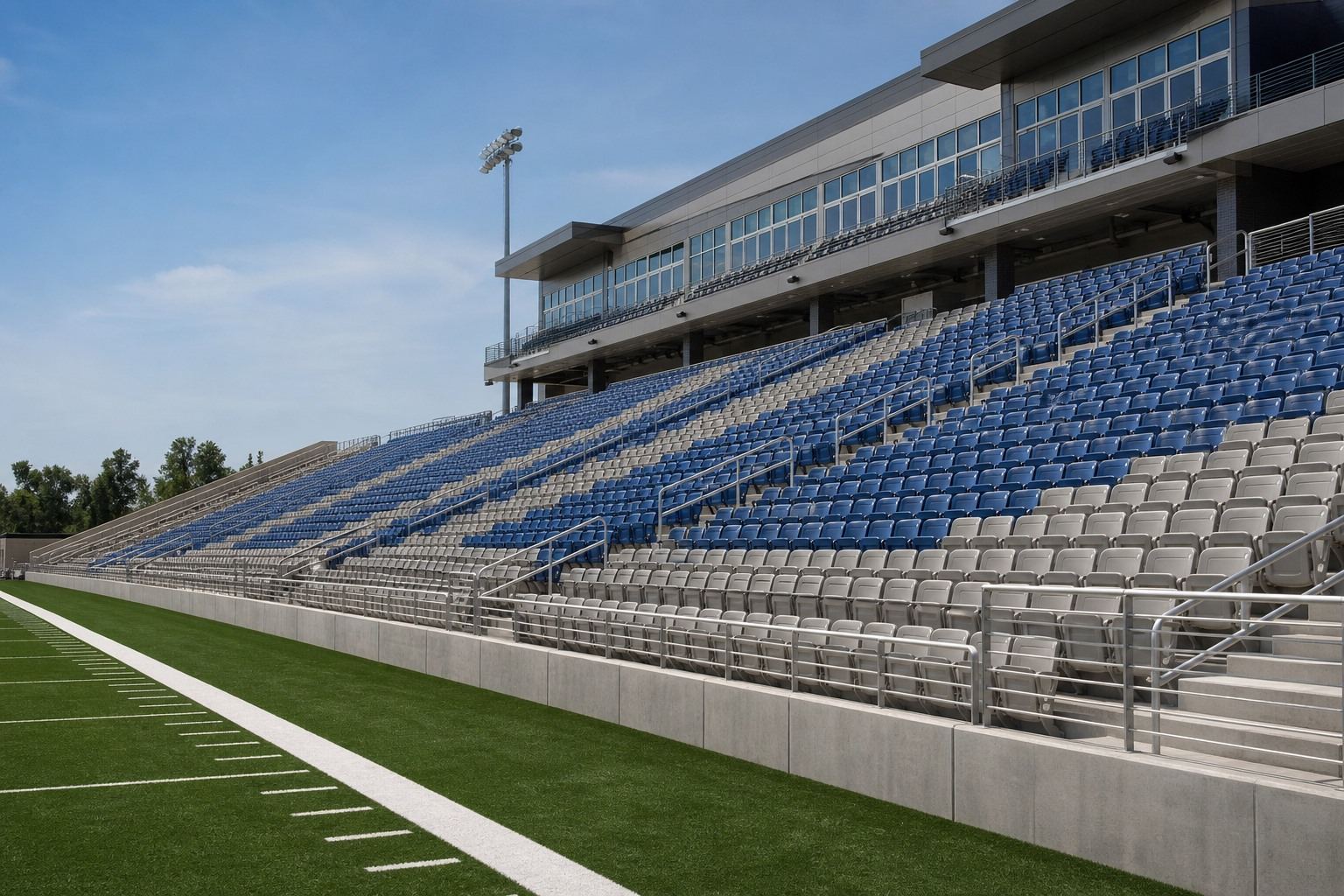
Fixed seats, tip-up seats, bench seating, VIP chairs, retractable seating, and replacement seat components differ in shell material, frame construction, mounting, spacing, ergonomics, fire performance, UV exposure, weather resistance, numbering, and accessibility requirements. The factory needs seating layouts and substrate details, not only a total quantity.
Bleachers and grandstand systems
Telescopic bleachers, aluminum grandstands, modular stands, rails, steps, aisles, and guard systems require structural engineering and clear assembly documentation. Confirm design loads, dimensions, materials, welding, fasteners, anti-corrosion finish, movement mechanisms, locking, floor interfaces, and installation responsibility.
Sports flooring and surfaces
Indoor sports tiles, timber systems, rubber flooring, artificial turf, running-track materials, and court coatings have different substrates and installation processes. Buyers should define sport type, indoor or outdoor use, base condition, shock absorption, friction, thickness, drainage, UV exposure, color, line marking, adhesive, maintenance, and testing requirements.
Goals, nets, posts, and court equipment
Football goals, basketball systems, volleyball posts, tennis posts, nets, padding, scoreboards, and training equipment need correct dimensions, material thickness, stability, anchoring, surface treatment, net specification, moving parts, and replacement components. Portable equipment should be evaluated for tipping and transport as well as normal use.
Fencing and venue accessories
Sports fencing, barriers, railings, lockers, benches, team shelters, storage racks, protective padding, and signage often come from different specialist factories. Multi-category projects need one approved finish schedule, labeling method, hardware list, and delivery sequence.
Manufacturer, project integrator, or trading supplier?
Few factories manufacture every sports facility category. A stadium seating manufacturer may mold seat shells and fabricate frames but purchase fasteners or numbering systems. A project integrator may coordinate seating, flooring, fencing, and accessories from several factories. This can be useful, but the buyer should know who engineers, manufactures, tests, inspects, and warrants each part.
Verify the registered company, production site, engineering team, similar projects, equipment, subcontracting, quality procedures, capacity, and export experience. Ask for evidence related to comparable product type and project size rather than unrelated reference photos.
Prepare a project RFQ
A professional RFQ should include architectural drawings, seating or equipment layouts, quantities by area, dimensions, materials, colors, mounting substrate, environmental conditions, required standards, branding, packaging, destination, site schedule, and installation scope. Identify which party supplies anchors, tools, spare parts, shop drawings, calculations, manuals, and site supervision.
Control drawings and approvals
Use a documented approval sequence: concept or tender requirement, supplier proposal, technical clarification, shop drawings, material and color samples, prototype or mock-up, final bill of materials, packaging plan, and production release. Revision numbers should appear on drawings and approvals so the factory does not build from an outdated file.
For engineered systems, calculations and compliance decisions should be reviewed by qualified professionals responsible for the destination project. A supplier's previous test report does not automatically cover a changed structure, mounting condition, material, or configuration.
Quality control priorities
- Dimensions and hole positions against approved drawings
- Material grade, thickness, weight, and critical components
- Welding, molding, assembly, edges, and surface finish
- Color consistency between batches and replacement parts
- Coating, galvanizing, corrosion, UV, or weather requirements
- Movement, locking, folding, adjustment, or rebound functions
- Hardware completeness and clear part identification
- Numbering, labels, logo, and installation references
- Packaging strength, palletization, carton marks, and loading order
Inspection should use the approved drawings and product-specific test plan. For structural or safety-related items, factory inspection may need to be supported by qualified engineering review or accredited testing.
Packaging and container loading
Sports facility products are often bulky, heavy, long, or easily scratched. Packaging should protect finished surfaces while keeping parts organized by section or installation sequence. Confirm pallet dimensions, wooden cases where required, moisture protection, hardware kits, carton marks, packing lists, and lifting requirements.
A loading plan should consider weight distribution, unloading equipment, site storage, and installation order. Mixing components randomly to improve container utilization can create expensive delays at the destination.
Common project pain points
Missing parts delay installation
Use a controlled bill of materials, numbered hardware kits, section-based packing, packing photographs, and quantity verification before loading.
Factory drawings do not match the site
Confirm site measurements and mounting conditions before production, record all revisions, and require final shop drawing approval.
Colors differ across batches
Approve physical color references, define acceptable variation, plan production batches, and retain samples for future replacement orders.
Products pass inspection but arrive damaged
Review packaging as part of product quality. Use handling tests, edge protection, surface film, secure pallets, and a loading supervision plan.
Supplier promises installation but scope is unclear
Define whether support includes manuals, video guidance, remote assistance, site supervision, tools, anchors, labor, travel, and acceptance testing.
How REGAL Sourcing supports sports facility projects
REGAL Sourcing helps international buyers identify sports facilities manufacturers and specialist suppliers, compare quotations against one scope, coordinate samples and drawings, follow production, inspect products and packaging, supervise loading, and organize export handover. For multi-supplier projects, we track approvals, completion dates, packing data, and shipment readiness across categories.
See our stadium seating project, sports facilities industry support, and complete sourcing services.
Related reading: Compare project procurement requirements in our building materials manufacturer guide and bathroom equipment manufacturer guide.
Frequently asked questions
What products can a sports facilities manufacturer supply?
Depending on specialization, products may include seating, bleachers, grandstands, flooring, turf, goals, nets, fencing, scoreboards, lockers, and venue accessories. Verify the actual factory for each category.
How should buyers evaluate a stadium seating supplier?
Review comparable projects, engineering support, materials, mounting details, testing, quality control, packaging, spare parts, and installation documentation.
What should be inspected before shipment?
Verify drawings, dimensions, materials, finish, functions, hardware, labels, quantities, packaging, part identification, and loading sequence.