
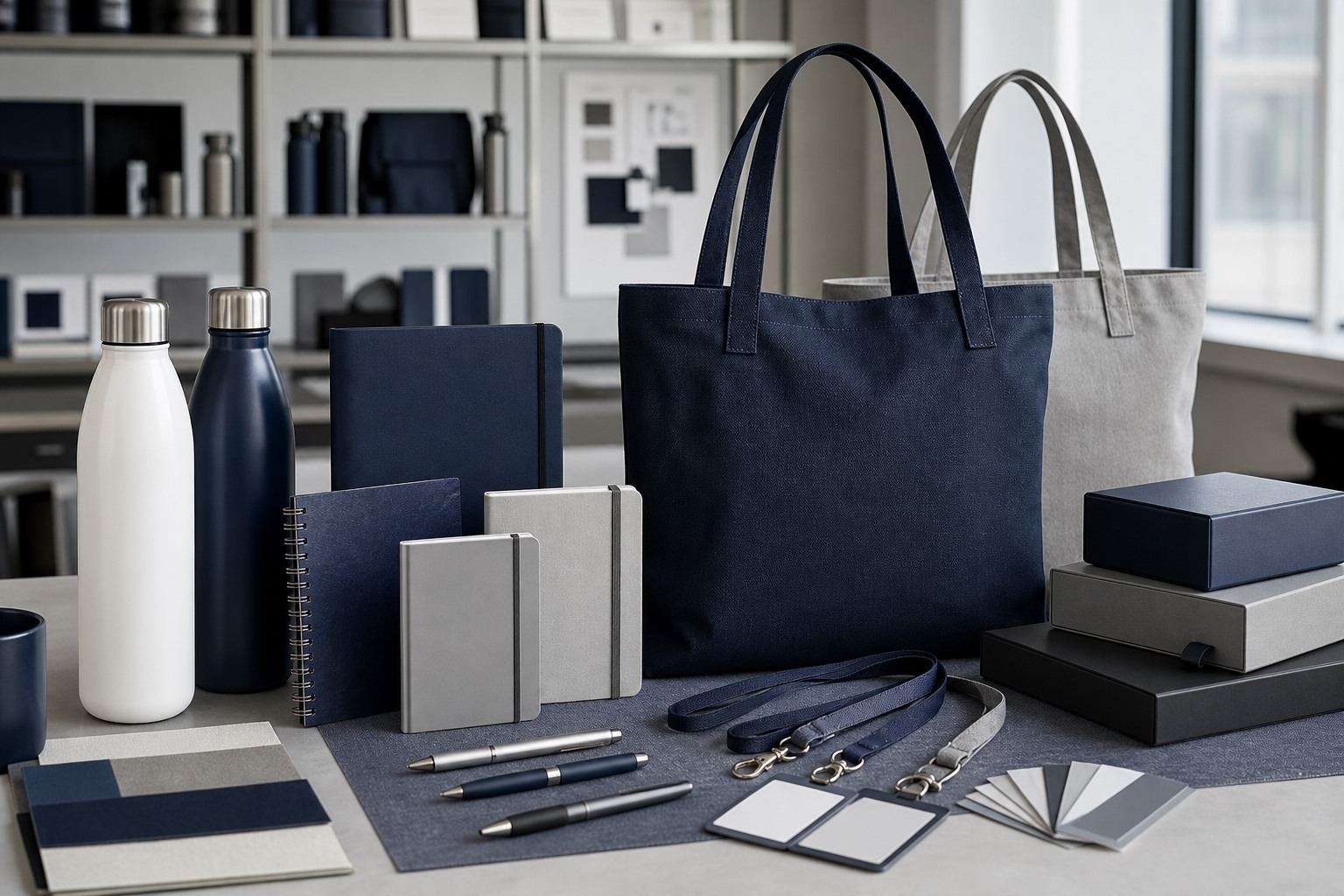
A promotional product is more than an item carrying a logo. It is a physical point of contact between a brand and a person. When the item is relevant, useful, and well made, the recipient may keep it for months or years. Each use can reinforce the brand in a natural context. When the product is poorly chosen or badly produced, it can create the opposite impression.
Effective promotional merchandise begins with brand strategy, not a catalog search. The product, material, decoration method, packaging, distribution moment, and quality standard should all support one clear idea: what should the recipient feel, understand, or remember about the brand?
The role of promotional products in brand marketing
Digital advertising can create fast reach, but attention often disappears when the screen changes. A physical gift can remain in a workspace, home, vehicle, travel bag, or daily routine. This gives branded merchandise a different role within the marketing mix: it can turn a short campaign interaction into repeated physical exposure.
The strongest promotional products usually perform at least one of these functions:
- Recognition: making the brand visually familiar through repeated use.
- Association: connecting the brand with a useful activity, event, or emotion.
- Appreciation: thanking clients, employees, partners, or community members.
- Participation: encouraging people to join an event, launch, membership, or campaign.
- Identity: helping teams, customers, or fans express belonging to a group.
- Conversation: creating an item distinctive enough to prompt questions or social sharing.
A logo alone does not create these outcomes. The recipient must find a reason to keep, use, display, wear, or share the product.
Choose products around the recipient
Start with the audience and use situation. A conference visitor, premium customer, new employee, retail shopper, sports participant, property buyer, and online subscriber have different expectations. A product that works at an outdoor event may feel irrelevant in an executive welcome kit.
Ask five questions before selecting an item:
- Who will receive it?
- Where and when will it be used?
- How long should it remain useful?
- What brand attribute should it communicate?
- How will it be distributed and transported?
Product relevance is usually more valuable than novelty alone. A thoughtful everyday item can generate more positive exposure than an unusual product that is used once and discarded.
Promotional product categories and their marketing value
Drinkware and food-related gifts
Bottles, tumblers, mugs, lunch containers, reusable cups, and bar accessories fit workplaces, events, travel, fitness, hospitality, and customer appreciation. They offer visible decoration areas and repeated use. Buyers should check food-contact requirements, lid sealing, coating durability, odor, insulation claims, dishwasher limitations, and packaging protection.
Bags, travel products, and organizers
Tote bags, backpacks, drawstring bags, cosmetic bags, laptop sleeves, packing cubes, and travel organizers create mobile brand exposure. Material weight, stitching, zipper quality, load capacity, handle reinforcement, lining, color consistency, and logo durability are important. A bag that fails under normal use damages both the item and the brand impression.
Apparel and textile merchandise
T-shirts, polo shirts, caps, socks, scarves, towels, blankets, and event wear can create identity and visibility. Fit, fabric weight, fiber content, shrinkage, colorfastness, stitching, size consistency, print feel, embroidery backing, and care labels require approval. Apparel is most successful when people would willingly wear it without being asked.
Office, desk, and technology accessories
Notebooks, pens, desk organizers, mouse pads, cable organizers, phone stands, laptop accessories, charging products, and USB-related items fit business audiences and employee programs. For powered electronics, confirm function, components, labeling, product compliance, and destination-market requirements. A technology gift should be safe and dependable, not merely inexpensive.
Outdoor, sports, and wellness products
Sports towels, resistance bands, caps, umbrellas, picnic products, outdoor bottles, cooling items, and wellness kits can connect a brand with activity and wellbeing. Product claims, material safety, durability, and cleaning instructions should be reviewed carefully.
Premium gifts and presentation sets
Gift boxes, executive sets, awards, leather accessories, metal products, customized home items, and curated kits can support client retention, anniversaries, launches, and recognition programs. The presentation sequence matters: box structure, insert fit, color, opening experience, message card, and finishing should feel coordinated rather than assembled from unrelated items.
Low-cost event giveaways
Badges, wristbands, keychains, stickers, magnets, small stationery, and simple accessories can serve large audiences. Even at low unit cost, the item should remain relevant and safe. Quantity should be planned around realistic distribution so excess stock does not become waste.
How materials influence brand perception
Material choice affects appearance, durability, cost, decoration options, packaging, shipping weight, and the story a brand can credibly tell.
- Textiles: cotton, polyester, canvas, felt, microfiber, nylon, and blended fabrics suit bags, apparel, towels, and soft accessories. Confirm composition, weight, weave, coating, colorfastness, shrinkage, and finishing.
- Metals: stainless steel, aluminum, zinc alloy, brass, and iron can create a durable or premium feel. Check grade, thickness, plating, corrosion resistance, edges, surface finish, and engraving results.
- Plastics: PP, ABS, PC, PET, acrylic, and other polymers support many shapes and price points. Material identification, color matching, recycled-content claims, odor, brittleness, heat resistance, and destination requirements need review.
- Silicone and rubber: useful for wristbands, grips, protective accessories, kitchen items, and flexible components. Evaluate hardness, elasticity, odor, surface dust attraction, color, and molded detail.
- Wood, bamboo, and cork: create natural texture and visual variation. Buyers should expect controlled differences in grain and color while checking moisture, cracking, splinters, coating, odor, and responsible material claims.
- Glass and ceramics: suitable for drinkware, home gifts, awards, and decorative items. Inspect shape, glaze, print, sharp points, thermal performance where relevant, and protective packaging.
- Paper and board: used for notebooks, cards, boxes, sleeves, tags, and presentation packaging. Confirm paper weight, board stiffness, print color, lamination, coating, folding, glue, and recycled or certified claims.
Terms such as eco-friendly, recycled, biodegradable, sustainable, or natural should be supported by clear material specifications and appropriate documentation. Marketing language should match what the product and supply chain can substantiate.
Logo printing and decoration methods
The correct branding process depends on material, surface shape, artwork, color, quantity, durability, and desired appearance. A method suitable for a flat cotton bag may not work on a curved metal bottle or textured silicone product.
Screen printing
Screen printing pushes ink through a prepared screen and is widely used on textiles, bags, flat plastics, paper products, and many promotional items. It is efficient for bold spot colors and medium or large quantities. Fine gradients and highly detailed multicolor artwork may require another method. Check ink coverage, registration, curing, adhesion, and resistance to rubbing or washing.
Pad printing
Pad printing transfers ink with a flexible silicone pad, making it useful for pens, small accessories, curved components, and irregular surfaces. It handles small logos well but usually has a limited print area. Check fine-line clarity, registration, opacity, and adhesion to the exact substrate.
Heat transfer printing
Heat transfer applies printed artwork to fabric or other compatible surfaces using heat and pressure. It supports detailed and multicolor graphics on apparel, bags, and soft goods. Buyers should review print feel, edge quality, stretch behavior, wash durability, heat marks, and color accuracy.
Dye sublimation
Sublimation turns dye into gas so it bonds with suitable polyester materials or coated surfaces. It is useful for full-color, edge-to-edge textile graphics, lanyards, sportswear, mugs, and selected coated products. It performs best with compatible light-colored materials. Check color profiles, image sharpness, ghosting, seams, and consistency between batches.
Digital and UV printing
Digital processes can reproduce detailed, full-color artwork without separate screens for each color. UV printing cures ink quickly on many rigid materials and can create layered or textured effects. It suits shorter runs and personalized designs, but adhesion and scratch resistance must be tested on the actual surface and coating.
Laser engraving
Laser engraving removes or changes the surface of metal, wood, coated products, leather alternatives, glass, and other compatible materials. It produces a durable, understated result without printed ink. The final color depends on the base material and coating, so an approved physical sample is important.
Embroidery and woven branding
Embroidery is commonly used for caps, polo shirts, bags, patches, and textiles. It can communicate durability and value, but very small lettering or complex gradients may not reproduce well. Review stitch count, thread color, density, backing, puckering, loose threads, and comfort. Woven labels and patches can hold finer details but require careful edge and attachment control.
Embossing, debossing, and hot foil
Embossing raises a design, while debossing presses it into the surface. These methods suit leather goods, notebooks, packaging, silicone, and selected molded products. Hot foil adds a metallic or colored film for a more decorative finish. Check pressure, depth, edge definition, foil coverage, alignment, and surface cracking.
Molded, enamel, and three-dimensional branding
Custom molds can integrate logos into silicone, rubber, plastic, metal, keychains, badges, and shaped products. Soft enamel and hard enamel are often used for pins, medals, and metal emblems. Tooling creates stronger product differentiation but adds setup cost, approval steps, and lead time. Confirm drawings, dimensions, color fills, plating, attachment method, and tooling ownership.
Control artwork before production
Artwork approval should define more than the logo file. Record the print size, exact position, colors, orientation, decoration method, product color, visible area, and acceptable tolerance. Provide vector artwork where possible and identify brand colors using a recognized color reference while understanding that color appearance changes across textiles, coated metal, plastic, ink, embroidery thread, and digital screens.
Request a digital mockup for placement, then approve a physical pre-production sample when color, scale, texture, or finish is important. A screen preview cannot reliably show metallic plating, fabric texture, engraving contrast, ink opacity, embossing depth, or packaging materials.
Quality control for branded merchandise
Promotional products often have fixed event dates and public brand exposure. Late delivery, incorrect colors, misspelled artwork, weak packaging, or poor function can make the entire order unusable. Quality control should begin before production, not at final inspection.
A practical quality plan may include:
- Approved product specification and reference sample
- Confirmed material, dimensions, weight, color, and function
- Approved logo file, size, position, method, and color reference
- Decoration adhesion, rub, scratch, wash, or tape tests as appropriate
- Workmanship checks for printing, stitching, assembly, edges, and finish
- Packaging artwork, inserts, barcode, labeling, and carton marks
- Quantity verification by SKU, color, size, and packing configuration
- Drop or transit testing where packaging damage is a significant risk
For a gift set, inspect both individual products and the assembled presentation. Inserts should hold products correctly, colors should coordinate, printed materials should face the intended direction, and the box should survive handling without scuffing or opening.
How gifts help people remember a brand
Brand recall develops through meaningful and repeated associations. A promotional product can support that process when its use naturally connects to the brand promise. A travel company might provide an organizer used during trips. A fitness brand might offer a durable training accessory. A technology company might create a useful desk or cable-management product. The context makes the brand easier to understand and remember.
Five principles improve the chance of lasting recall:
- Relevance: the item fits the recipient's needs or interests.
- Utility: it solves a small problem or improves a repeated activity.
- Quality: the product works properly and feels consistent with the brand position.
- Distinctiveness: color, form, packaging, message, or product choice creates recognition.
- Timing: the gift is connected to a meaningful event, achievement, welcome, purchase, or shared experience.
The largest logo is not always the most memorable. People are more likely to use an attractive product that carries restrained branding than an item that feels like an advertisement. Logo visibility should support product appeal rather than overpower it.
Build a promotional product campaign, not just an order
Promotional merchandise works best when integrated with the wider customer journey. Decide what happens before, during, and after the gift is received.
- Before: use registration, purchase behavior, membership, employee milestones, or campaign participation to select the right recipients.
- During: make the presentation intentional with packaging, a concise message, and a clear connection to the brand or event.
- After: invite useful follow-up such as product registration, community participation, feedback, user-generated content, or a relevant landing page.
QR codes and campaign URLs can connect physical merchandise to digital experiences, but they should provide real value. Avoid placing a code on an item without a clear reason to scan it. A guide, event resource, warranty page, membership benefit, or useful content is more compelling than a generic homepage.
Promotional merchandise across different programs
Trade shows: use a two-level strategy. A simple useful giveaway can support reach, while qualified prospects receive a more relevant follow-up item after a meaningful conversation.
Employee onboarding: combine practical workplace items with a welcome message and consistent packaging. Size collection, delivery location, and replacement planning matter for apparel.
Customer loyalty: choose products that recognize the relationship rather than feeling mass-distributed. Personalization, limited editions, or category relevance can improve perceived care.
Product launches: use merchandise to explain the launch idea, not distract from it. A coordinated kit can introduce product features, values, or use occasions.
Retail promotions: confirm whether the gift should increase basket size, encourage trial, support a seasonal theme, or reward repeat purchases. Packaging and in-store display requirements should be included in the sourcing brief.
Community and events: select products appropriate to the location, weather, activity, and audience. Distribution speed, carton access, and on-site storage can be as important as the item itself.
Measure more than the number distributed
Distribution quantity is an operational metric, not proof of marketing value. Define the objective before production and select measures that fit the campaign. These may include qualified leads, event attendance, repeat purchase, referral activity, landing-page visits, employee participation, customer feedback, social content, or product use observed over time.
Collect qualitative feedback as well. Ask recipients which items they kept, used, shared, or gave away and why. This information can improve the next product selection and reduce spending on merchandise that creates little value.
What to include in a promotional products RFQ
A complete sourcing brief helps factories quote comparable products and prevents late changes:
- Campaign purpose and target recipient
- Product reference, dimensions, materials, colors, and function
- Order quantity by SKU, size, or color
- Logo artwork, decoration method, size, placement, and color
- Individual packaging, gift box, insert, label, barcode, and carton requirements
- Destination country and relevant compliance requirements
- Sample approval, testing, inspection, and acceptable quality criteria
- Required delivery date, event date, and shipping method
Always build time for sample development, artwork approval, production, inspection, corrective action, and transport. An event deadline should not be treated as the factory completion date.
How REGAL Sourcing supports custom promotional products
REGAL Sourcing helps international buyers develop promotional merchandise around a clear product and quality brief. Support can include product research, supplier matching, quotation comparison, material and decoration review, sample coordination, logo and packaging follow-up, production monitoring, pre-shipment inspection, consolidation, and export handover.
For campaigns containing several products, we coordinate approvals and timelines across suppliers so colors, branding, packaging, and delivery requirements remain consistent. Explore our promotional products sourcing, promotional gifts project, and complete China sourcing services.
Frequently asked questions
What makes a promotional product effective?
It should be relevant, useful, well made, consistent with the brand, and appropriate to the distribution moment. A product people choose to keep usually provides more value than one selected only for a low unit price.
Which logo printing method is best?
There is no universal best method. The correct choice depends on material, shape, artwork, colors, quantity, durability, and desired appearance. Test the chosen process on the actual product surface.
How should buyers check branded merchandise quality?
Approve the product and artwork specification before production, then inspect materials, dimensions, colors, function, decoration, workmanship, packaging, labels, cartons, and quantity. Add product-specific durability tests where needed.
How can branded gifts improve brand recall?
A relevant gift can place the brand inside a repeated activity or positive experience. Utility, quality, distinctiveness, and timing generally matter more than making the logo as large as possible.