
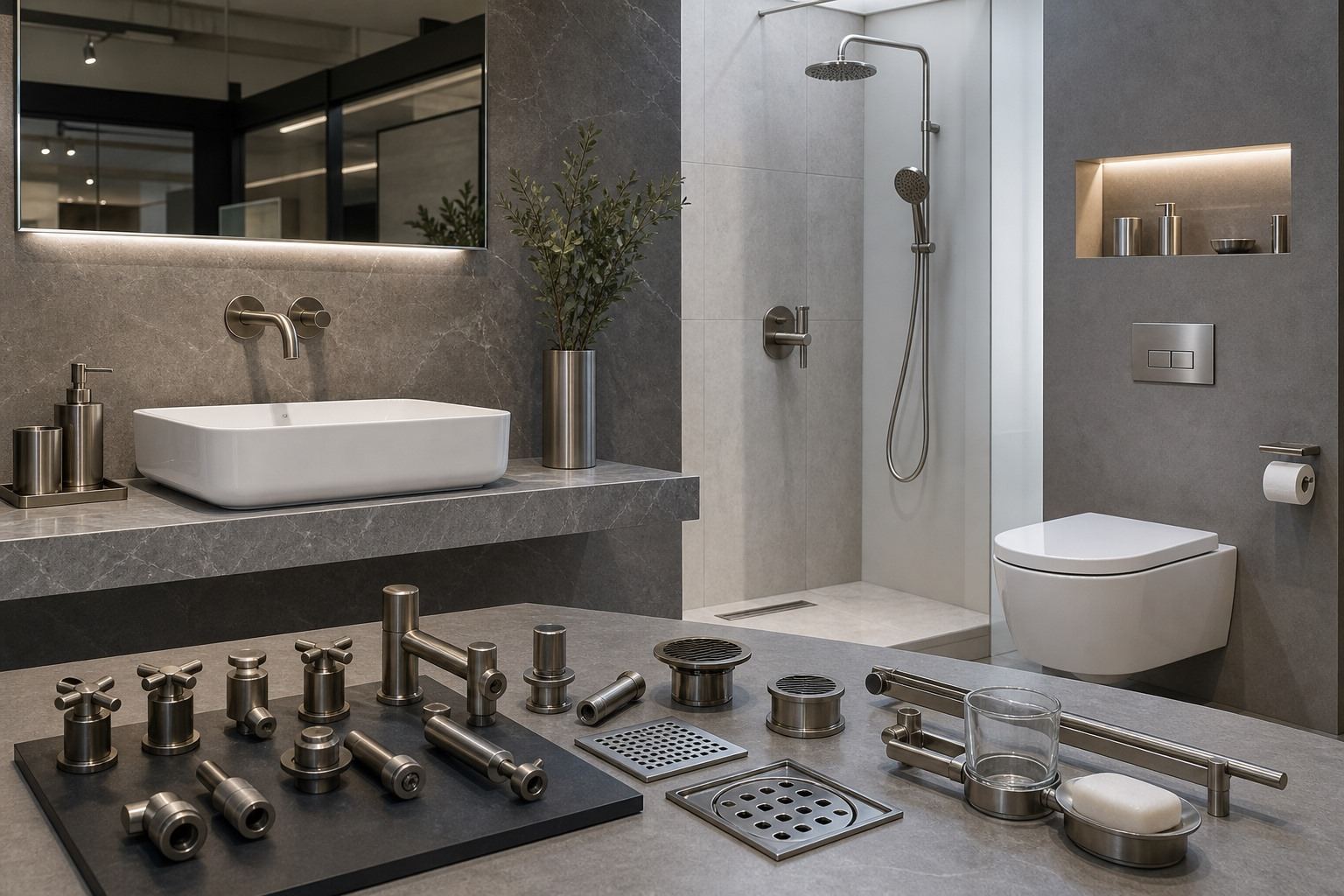
Bathroom equipment purchasing combines visual design, water control, mechanical durability, installation compatibility, and project logistics. A product can look attractive in a showroom but create expensive problems when finishes vary, cartridges fail, fittings do not match local connections, glass breaks in transit, or installation kits arrive incomplete.
What different B2B buyers need
Distributors need repeatable models, retail packaging, spare parts, and stable reorder quality. Contractors need drawings, complete installation sets, delivery by area, and fast technical clarification. Hotel and apartment projects need coordinated finishes, easy maintenance, replacement stock, and consistent room packages. Importers need verified factories, relevant compliance information, efficient loading, and clear responsibility for defects.
Bathroom equipment product categories
Faucets, mixers, and valves
Basin, kitchen, bath, sensor, and thermostatic products differ in body material, casting, machining, cartridge, aerator, hose, valve, plating, finish, flow, pressure, temperature control, and connection size. Confirm which components are produced in-house and which are purchased. Critical component brands or specifications should not change without approval.
Shower systems and accessories
Hand showers, overhead showers, rails, concealed sets, thermostatic mixers, hoses, brackets, and drains must work as a system. Check spray function, flow, pressure range, leakage, hose length, thread compatibility, diverter operation, temperature control, finish consistency, and all concealed and visible components.
Sanitary ware
Toilets, basins, bidets, ceramic accessories, and related products require control of dimensions, glaze, color, deformation, cracks, pinholes, drainage, flushing where applicable, mounting points, compatible fittings, and protective packaging. Ceramic batches should be coordinated for shade and size.
Bathroom vanities, cabinets, and mirrors
Vanities combine boards or solid materials, finishes, hardware, basins, countertops, drawers, mirrors, lighting, and plumbing clearances. Define moisture resistance, dimensions, edge sealing, hinges, slides, load, surface finish, electrical components, wall mounting, and flat-pack or assembled delivery.
Glass enclosures and metal hardware
Shower doors, panels, hinges, handles, channels, and seals depend on measured openings, glass type and thickness, hole positions, edge finishing, hardware grade, coating, adjustment range, seals, and installation. Drawings and site tolerances are essential for project orders.
Bathroom accessories
Towel bars, hooks, shelves, dispensers, grab bars, toilet accessories, baskets, drains, and hotel fittings may use stainless steel, brass, zinc alloy, aluminum, plastic, glass, or mixed materials. Check base material, thickness, plating, welds, load, corrosion, mounting hardware, and finish matching.
Manufacturer or bathroom project supplier?
A faucet factory is not necessarily a ceramic, vanity, or glass manufacturer. A bathroom project supplier may coordinate several specialist factories and offer one finish schedule and shipment. This can simplify procurement, but buyers should identify the manufacturing source, warranty responsibility, and quality plan for every category.
Verify the legal business, production site, specialization, casting or molding, machining, polishing, plating, assembly, testing, quality staff, component suppliers, subcontracting, capacity, and export markets. Review factory evidence for the exact product family being purchased.
Prepare a complete bathroom RFQ
Include model references, drawings, dimensions, base materials, finish codes, cartridges or valves, connections, pressure and flow expectations, installation conditions, quantities by room or SKU, packaging, labels, spare parts, destination, required documentation, and delivery date. For hotel projects, issue a room schedule showing every visible and concealed component.
Sample and mock-up approval
Inspect the complete sample, not only the visible body. Check weight, dimensions, threads, cartridge, aerator, hoses, valves, seals, mounting hardware, instructions, and packaging. Operate moving parts repeatedly and test with the expected pressure and connections where possible. For projects, install a bathroom mock-up before releasing the main order.
Record every approved component and finish. If a supplier changes a cartridge, hose, seal, coating process, board, hinge, or glass hardware after approval, evaluate the effect before production continues.
Bathroom equipment quality control
- Model, dimensions, connection sizes, and installation clearances
- Base material, thickness, weight, and critical components
- Polishing, plating, coating, glaze, color, and finish consistency
- Leaks, pressure, flow, valve, diverter, cartridge, or flushing function where relevant
- Threads, seals, hoses, glass edges, cabinet hardware, and moving parts
- Complete mounting kits, accessories, instructions, and spare parts
- Logo, labels, barcode, model identification, and quantity
- Inner protection, carton strength, pallets, crates, and carton marks
Use product-specific testing. A visual inspection cannot replace leakage checks for faucets, stability checks for cabinets, or glass and hardware verification for enclosures.
Packaging and shipment protection
Bathroom products combine heavy metal, fragile ceramics, glass, mirrors, coated surfaces, and small installation parts. Each needs different protection. Use molded inserts, foam, bags, corner guards, protective film, reinforced cartons, crates, pallets, and moisture protection as required. Keep accessories and hardware kits clearly identified.
Plan loading by weight and fragility. Ceramics and glass should not carry unsuitable loads, and finished metal surfaces need protection from rubbing. Confirm package dimensions early because bulky vanities and enclosures can dominate freight cost.
Common sourcing pain points
Different finishes across product categories
Create a master finish sample, compare every supplier against it, inspect under consistent lighting, and approve allowable differences between materials.
Leaks appear after installation
Control body construction, cartridges, valves, hoses, seals, threads, assembly, and pressure testing. Keep batch and component records for claims.
Products do not fit local plumbing
Confirm connection standards, thread sizes, pressure, installation depth, wall condition, power supply, drainage, and local professional review before production.
Hotel rooms receive incomplete kits
Pack by room or controlled SKU set, use checklists, label concealed and visible parts, inspect kit quantities, and provide installation references.
Breakage increases project cost
Test packaging, reinforce high-risk areas, supervise loading, and include agreed spare quantities for fragile or finish-sensitive products.
How REGAL Sourcing supports bathroom equipment buyers
REGAL Sourcing helps buyers identify bathroom equipment manufacturers and project suppliers, compare complete quotations, coordinate finish and product samples, follow production, inspect function and packaging, supervise loading, and arrange export handover. For hotel and apartment projects, we track room schedules, accessories, spare parts, packaging, and completion dates across suppliers.
See our hotel bathroom project, bathroom equipment industry support, and complete sourcing services.
Related reading: Review the building materials manufacturer guide and custom ODM/OEM development guide.
Frequently asked questions
What products can a bathroom equipment manufacturer supply?
Specialized factories may supply faucets, showers, sanitary ware, vanities, mirrors, glass enclosures, drains, accessories, valves, hoses, and installation components.
How should buyers select a supplier?
Review specialization, materials, production processes, finishing, component sources, leakage and function testing, quality systems, packaging, capacity, and comparable export projects.
What should be inspected before shipment?
Verify models, dimensions, materials, finish, function, accessories, installation kits, labels, quantities, protective packaging, and carton marks.